Water source
Spring, tank, well, canal or municipal supply can differ in reliability, sediment and available pressure.
Irrigation Systems Nepal
Nepal-focused irrigation planning for drip, sprinkler, micro-irrigation, filtration, pressure management, fertigation, storage and pumping.
Site-first planning
Ag-En Plus treats equipment as part of a production system. The correct choice changes with site conditions, crop, water, operating capacity and the level of control actually required.
Spring, tank, well, canal or municipal supply can differ in reliability, sediment and available pressure.
Sloping farms can create major pressure differences, requiring zoning or regulation instead of one uncontrolled line.
Emitter reliability depends on matching filtration and maintenance to water quality and the selected irrigation device.
Lateral layout, emitter spacing and flow should follow crop geometry and root-zone needs rather than a generic package.
Injectors and dosing arrangements should be selected with water flow, fertilizer compatibility and operator control in mind.
Flushing, filter cleaning, leak isolation and access to valves should be designed into the system from the beginning.
System pathways
Explore the connected solution and product families, then narrow the technical scope using actual project information.
Localized delivery for vegetables, orchards, protected crops and row systems.
Open guide →ExploreProtect downstream valves, emitters and misting systems from suspended material.
Open guide →ExploreDivide the farm into manageable zones and maintain suitable operating pressure.
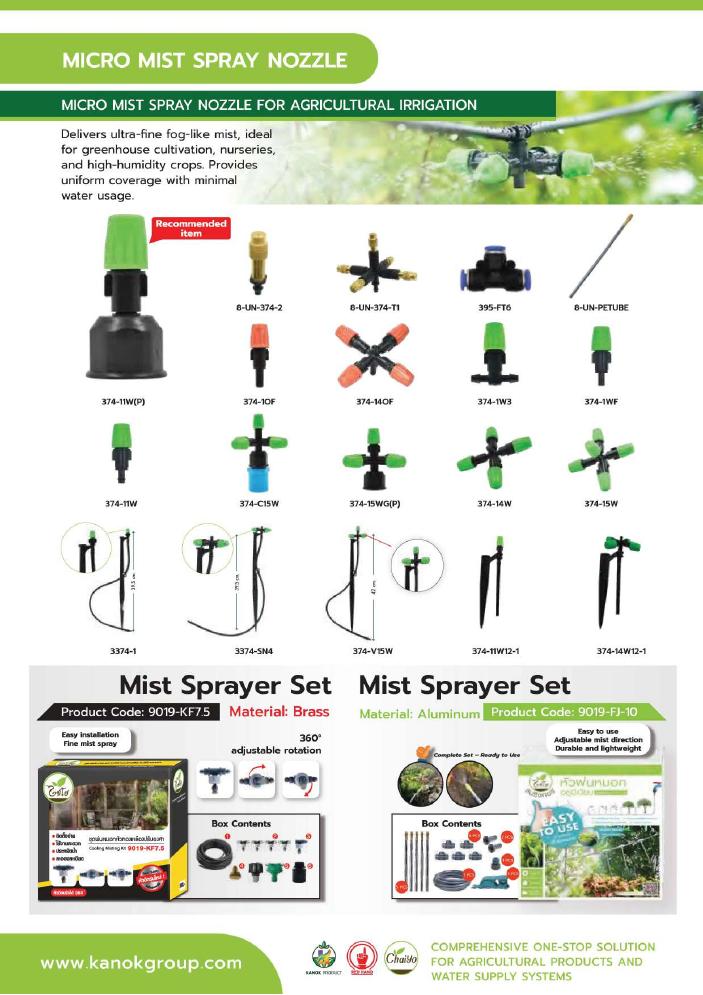
Open guide →ExploreUseful for nursery, orchard, cooling or selected field applications depending on design.
Open guide →ExploreVenturi and related injection components for nutrient delivery through irrigation.
Open guide →ExploreTimers, valves and sensors where scheduled or responsive operation adds value.
Open guide →Nepal context
These are planning contexts rather than fixed prescriptions. Final sizing and specifications should be based on a site-specific assessment.
Consider pressure zones, gravity-fed options, air release, storage elevation and accessible flushing points.
High seasonal water demand, heat and large blocks can make zoning, filtration and pump sizing especially important.
Irrigation should coordinate with crop rows, fertigation, filtration, drainage and expansion of additional bays.
Prioritise simple controls, robust filters and components that can be inspected and maintained locally.
Project workflow
A useful quotation starts with measurable site information. This reduces guesswork and makes product quantities, water-system decisions and installation scope easier to define.
Frequently asked questions
Exact specifications, commercial terms and installation requirements should be confirmed against the final project scope.
It depends on crop, soil or growing media, field layout, water quality, climate and management. The correct choice is application-specific.
Small flow passages can clog. Filtration helps protect emitters and should be combined with regular cleaning and flushing.
Some sites can use gravity where elevation and flow are adequate, but pressure and zone requirements still need to be checked.
Often yes if the hydraulic layout leaves suitable connection, filtration and control points, but it is better to plan for it early.
Nepal agriculture project desk