Structural suitability
Existing roof capacity and waterproofing should be considered before adding heavy growing systems or water storage.
Rooftop Farming Nepal
Rooftop and urban farming guidance for Nepal covering compact growing units, irrigation, drainage, access, water storage and practical maintenance.
Site-first planning
Ag-En Plus treats equipment as part of a production system. The correct choice changes with site conditions, crop, water, operating capacity and the level of control actually required.
Existing roof capacity and waterproofing should be considered before adding heavy growing systems or water storage.
Irrigation and rainfall runoff need a controlled path that protects the roof and keeps access areas usable.
Compact drip systems can reduce repetitive watering, but tank placement, pressure and hose routing still matter.
Rooftops can be more exposed than ground gardens, influencing crop protection, support and irrigation frequency.
Growing layout should preserve safe movement for planting, harvesting, cleaning and carrying inputs.
Growing media, containers and stored water all add load, so lightweight and modular approaches may be preferable.
System pathways
Explore the connected solution and product families, then narrow the technical scope using actual project information.
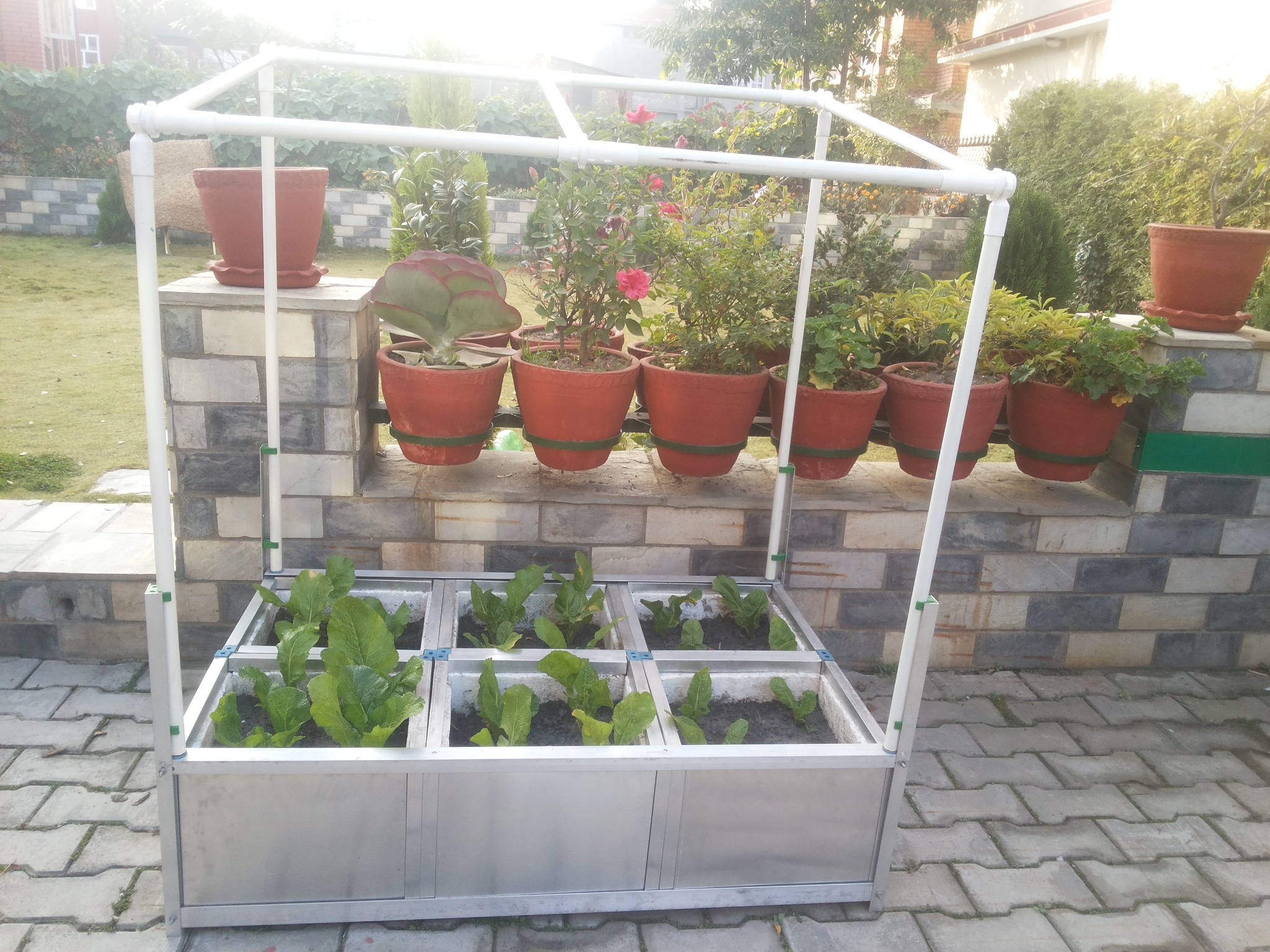
Compact Ag-En Plus growing concept for rooftops, balconies, yards and open household spaces.
Open guide →ExploreModular pots, grow bags or beds organised around crop needs and access.
Open guide →ExploreSmall-zone irrigation to reduce daily manual watering while controlling runoff.
Open guide →ExploreLightweight protection or trellis elements selected around crop and roof exposure.
Open guide →ExploreSoilless options where water quality, nutrient management and maintenance can be supported.
Open guide →ExploreSmall buffer storage can support irrigation where supply timing is irregular, subject to roof suitability.
Open guide →Nepal context
These are planning contexts rather than fixed prescriptions. Final sizing and specifications should be based on a site-specific assessment.
Urban space efficiency, access, seasonal water availability and building constraints should drive layout decisions.
Heat, direct sun and wind exposure can increase irrigation demand and plant stress.
Smaller modules and careful drainage can make systems easier to manage than one large heavy installation.
Schools, offices or hospitality projects may prioritise demonstration, food production, visibility and safe visitor access.
Project workflow
A useful quotation starts with measurable site information. This reduces guesswork and makes product quantities, water-system decisions and installation scope easier to define.
Frequently asked questions
Exact specifications, commercial terms and installation requirements should be confirmed against the final project scope.
No. Structural capacity, waterproofing, drainage, access and safety should be checked before adding growing media, water tanks or structures.
Yes, it can reduce repetitive watering and improve control when pressure, filtration and drainage are properly planned.
Ag-En Plus uses Vegetable Production Unit for a compact growing concept intended for rooftops, balconies, yards and other open household spaces.
It can where structural, water-quality, power, nutrient-management and maintenance requirements are suitable for the site.
Nepal agriculture project desk